 Deutsch
 日本語
日本語 العربية
 한국어
한국어 Español
 Português
 Indonesia
 Tiếng Việt
 中文
中文
Forex Trading for Beginners Thursday December 18th, 2025 – Posted in: Forex trading
Why Forex Trading Isn’t “Easy Money,” but Discipline, Knowledge, and Mindset
Introduction: Why We Avoided Writing This Article for So Long
For a long time, we avoided the topic of Forex trading for beginners. Not because it isn’t important—on the contrary, it’s one of the most popular and widely searched topics in trading. The reason was different: the market is flooded with articles, videos, and courses that create a dangerous illusion—that you can trade Forex with little to no knowledge.
You’ve probably seen phrases like:
-
“Open an account and start earning from day one”
-
“Forex is for everyone”
-
“All you need is an indicator”
-
“Follow signals and stay in profit”
They sound appealing, but they don’t match reality.
Forex is not a casino and it’s not a “money button.” It’s a complex, highly competitive environment where you are trading against banks, funds, algorithms, market makers, and other experienced participants.
That’s exactly why we decided to write this article.
Honestly. Without marketing promises.
For those who genuinely want to understand what Forex is—and where to begin.
Part 1. The Biggest Forex Myth: “You Don’t Need Knowledge”
A Minimum Level of Knowledge Is Mandatory
One of the most harmful myths in the industry is the idea that:
“Forex is so simple you’ll figure it out as you go.”
That’s not true.
Yes, technically anyone can open a trade:
-
install a platform
-
click Buy or Sell
-
choose a lot size
But pressing a button ≠ understanding the market.
A minimum level of knowledge is not a luxury—it’s a basic requirement for survival. Without it, a trader:
-
doesn’t understand why trades hit the stop-loss
-
doesn’t realize how much news events influence price
-
confuses random profits with a strategy
-
increases risk after a winning streak
-
loses the deposit faster than they can learn
The Deeper Your Knowledge, the Higher Your Probability of Success
It’s important to understand a simple rule:
In Forex there is no guaranteed success—but there is statistically more likely success.
And that probability directly depends on:
-
understanding market structure
-
risk management
-
discipline
-
experience
-
the ability to analyze your own mistakes
The deeper you go into:
-
pricing mechanics
-
liquidity flow logic
-
price behavior during news
-
crowd psychology
the less chaotic the market feels—and the more it becomes a system you can work with.
Part 2. What Forex Is in Simple Words (Without Oversimplifying)
Forex Is a Currency Exchange Market
Forex (Foreign Exchange) is a global decentralized market where:
-
you buy one currency
-
while simultaneously selling another
Examples of currency pairs:
-
EUR/USD
-
GBP/JPY
-
USD/JPY
-
AUD/USD
When you open a trade:
-
you are not “guessing” randomly
-
you are making a decision based on expectations of price movement
Why Forex Is So Liquid
Forex is the most liquid market in the world:
-
daily turnover is measured in trillions of dollars
-
trading runs 24 hours a day (Monday through Friday)
-
banks, corporations, funds, governments, and traders participate
But high liquidity does not mean easy profit.
It means:
-
intense competition
-
fast price moves
-
instant reaction to information
Part 3. The Reality: Why Most Traders Lose Money
This is the uncomfortable—but honest—part.
Most beginner traders:
-
lose their deposit within the first few months
-
do it more than once
-
come back again, hoping “this time it will work”
The Main Reasons People Lose
-
No system
-
trades based on intuition
-
constant strategy switching
-
Poor risk understanding
-
lot sizes that are too large
-
no stop-loss
-
averaging down with no plan
-
Psychology
-
fear of closing a loss
-
greed after profits
-
the urge to “win it back”
-
Belief in miracle indicators
-
“100% signals”
-
“no-loss strategies”
-
“secret settings”
Forex doesn’t punish you.
It doesn’t care.
And it systematically takes money from those who are not prepared.
Part 4. Our Experience: From 2000 to Today
The Market Changed—And So Did Traders
We’ve been watching this market since the early 2000s. Over that time, a lot has changed:
-
technology
-
execution speed
-
algorithms
-
regulation
-
broker behavior
But the trader has changed too.
Modern Beginner Traders
Today we see a clear trend:
-
young people are less focused
-
it’s harder to hold attention
-
patience is lower
-
expectations are faster and more immediate
That’s not “good” or “bad”—it’s simply the reality of this era.
Social media, short videos, and instant information shape a mindset like:
“If it doesn’t work quickly, it doesn’t work at all.”
But Forex is the opposite of instant results.
Part 5. Why You Still Need to Read, Learn, and Understand
Even if concentration is lower, even if you don’t want to read “boring theory”—you cannot skip the basics.
A beginner must understand:
-
what spread is
-
what liquidity is
-
why slippage happens during news
-
how leverage works
-
why risk matters more than profit
Without this, trading becomes a game with negative expected value.
Part 6. Forex Isn’t About Intelligence—It’s About Process
A very important point:
A successful trader is not necessarily the smartest person.
But it’s almost always someone who:
-
follows rules
-
can wait
-
accepts losses
-
thinks statistically
-
focuses on the process, not emotions
Forex is a marathon, not a sprint.
Part 7. What We Recommend to Beginners
1) Don’t rush
If you want to trade for years—not weeks—don’t rush to “make money.”
2) Learn the fundamentals
Without obsession, but consistently:
-
market basics
-
risk management
-
strategy logic
3) Accept that losses are part of the path
A loss ≠ a mistake.
A mistake is having no system.
4) Treat Forex like a skill
Like:
-
driving
-
programming
-
business
A skill develops through time and practice.
Part 8. Why Not All Strategies Should Be Indicator-Based
When a beginner enters Forex, the path often looks like this:
-
dozens of indicators on the chart
-
complicated settings
-
conflicting signals
-
confusion and overload
Paradoxically, the more indicators you add, the more:
-
difficult decisions become
-
doubts increase
-
mistakes happen
Indicators are not “bad” by themselves. The issue is:
Most indicators are derivatives of price—not the root cause of market movement.
That’s why, over years of practice, we concluded that beginners often do better with strategies that:
-
rely not on chart shapes but on market inefficiencies
-
have clear mathematical or event-driven logic
-
depend less on subjective interpretation
Below we’ll look at two approaches that are especially important in this context.
Part 9. Arbitrage Trading: Technically Harder, but Logically Clearer
What Arbitrage Means in Forex
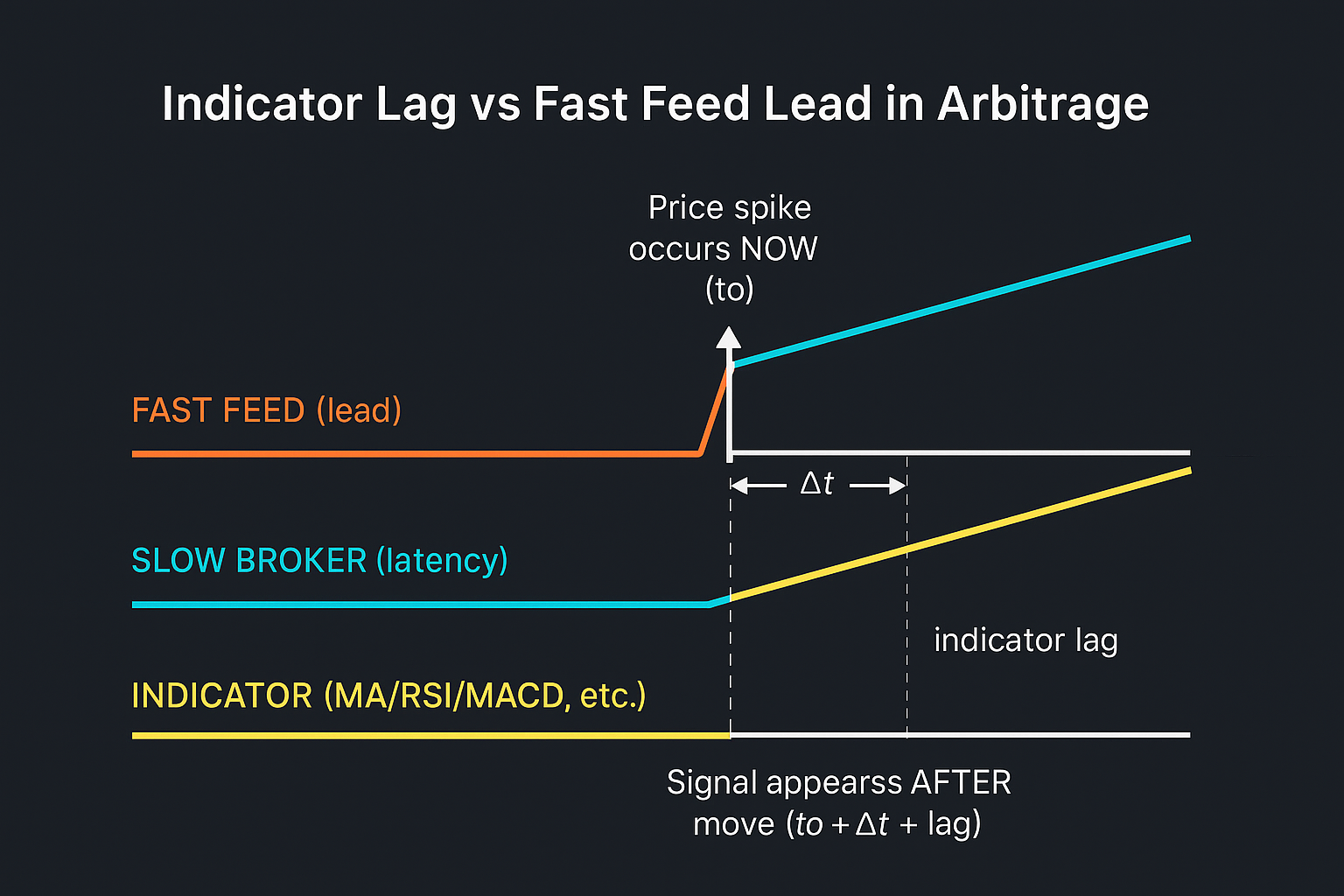
Arbitrage trading is not based on forecasting—it’s based on price differences.
In simple terms:
-
the same asset
-
at the same moment in time
-
is quoted at different prices by different liquidity providers or brokers
The trader’s job is:
-
buy where it’s cheaper
-
sell where it’s more expensive
-
lock in the difference
This is not guessing direction.
This is working with a temporary or price inefficiency.
Why Arbitrage Is Harder to Find, but Easier to Understand
For beginners, it sounds paradoxical, but:
-
arbitrage is harder to implement
-
yet easier to explain logically
You don’t need to:
-
predict whether price will go up or down
-
analyze dozens of indicators
-
build complex forecasts
You need to understand:
-
where price is lagging
-
where price is faster
-
and how quickly you can execute
Benefits of Arbitrage for Beginners
-
Lower probability of losses
You’re not trading “against the market”—you’re trading against delays. -
Higher probability of wins
With correct implementation, expected value can be positive. -
Less emotional influence
Trades are short, logic is clear, decisions are not made “by feel.” -
No indicators needed
Price itself is the main tool.
Table: Classic Trading vs Arbitrage
| Criteria | Indicator-Based Trading | Arbitrage |
|---|---|---|
| Direction prediction | Yes | No |
| Emotional dependence | High | Low |
| Indicators required | Required | Not required |
| Technical complexity | Low | High |
| Logical simplicity | Medium | High |
| Beginner mistake probability | High | Lower (if implemented correctly) |
Downsides and Honest Limitations
Arbitrage is not a “holy grail.” Its difficulties include:
-
it’s hard to find the right brokers
-
brokers may limit or ban arbitrage
-
execution speed matters
-
technical infrastructure is required
But the key point is this:
Arbitrage complexity is technical—not conceptual.
That’s why it often feels more understandable to beginners than classic indicator-based trading.
Part 10. News Trading: The Market Reacts to Facts, Not Lines
What News Trading Is
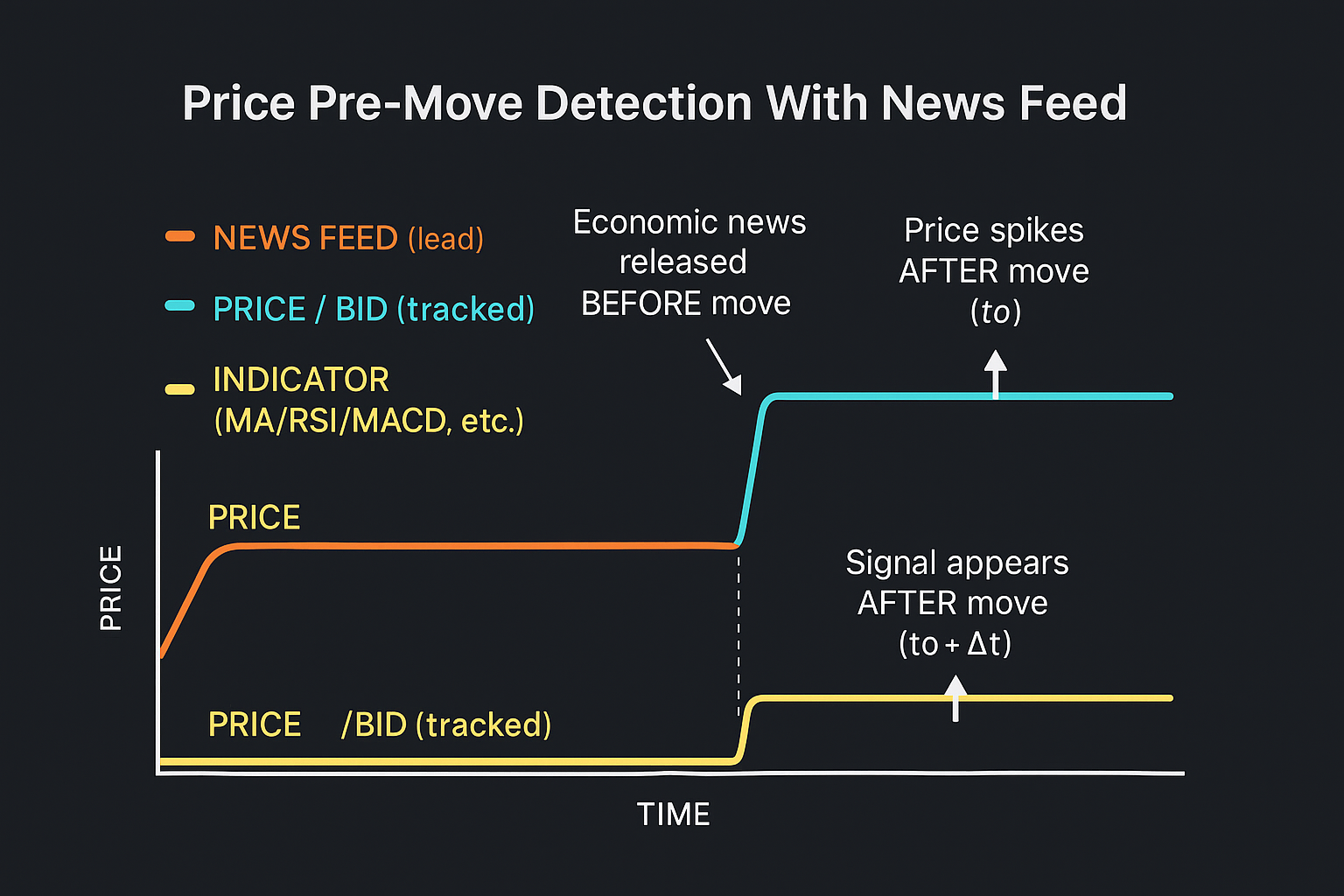
News trading is based on a simple idea:
-
markets react to economic events
-
reactions are often sharp
-
the first seconds/minutes can create liquidity imbalance
Examples of key news:
-
Non-Farm Payrolls (NFP)
-
central bank decisions
-
inflation (CPI)
-
interest rates
-
unexpected macroeconomic data
Table: News Types and Market Impact
| News Type | Examples | Typical Price Behavior |
|---|---|---|
| Labor market | NFP, Unemployment Rate | Sharp impulses |
| Inflation | CPI, PPI | Medium to strong moves |
| Interest rates | FOMC, ECB, BOJ | High volatility |
| Unexpected events | Crisis, geopolitics | Unpredictable spikes |
Why News Isn’t Chaos—It’s Structure
To beginners, news looks like chaos:
-
sudden candles
-
slippage
-
spread widening
But professionals see:
-
prior expectations
-
“better / worse than forecast” scenarios
-
liquidity reaction
-
risk asymmetry
News trading is not “guess the number.” It’s working with how the market reacts when reality deviates from expectations.
Why News Trading Can Fit Beginners (With the Right Approach)
-
Clear time boundaries
There is a specific event and a specific time. -
Clear logic
Fact → reaction → impulse. -
Less subjectivity
Decisions are scenario-based, not emotional. -
No indicators required
Price and speed are key.
Real Risks of News Trading
Honest disadvantages:
-
slippage
-
spread widening
-
requotes
-
order cancellations with some brokers
That’s why news trading:
-
requires testing
-
requires correct infrastructure
-
requires understanding that “zero spread” is not the main factor
Comparative Table: Strategies for Beginners
| Strategy | Ease of Understanding | Risk | Beginner-Friendly | Based On |
|---|---|---|---|---|
| Indicator-based trading | Medium | High | ❌ Often not | Price derivatives |
| Price Action | Medium | Medium | ⚠️ With experience | Price behavior |
| Arbitrage | Low (logic) / High (tech) | Below average | ✅ Yes | Price discrepancies |
| News trading | Medium | Medium | ✅ Yes | Facts & expectations |
Part 11. Why These Approaches Beat “50 Indicators”
The overall conclusion about arbitrage and news trading:
-
they rely on real drivers of price movement
-
they don’t require “guessing”
-
they depend less on interpretation
-
they are closer to professional trading than retail-style indicator stacking
This doesn’t mean they are “easy.”
It means they are logical.
Final Add-On
We are not claiming that:
-
arbitrage or news trading fits everyone
-
they guarantee profits
-
this is a shortcut
What we are saying is this:
For beginners, strategies based on market structure are often safer and more understandable than trading indicators without context.
Forex is not magic.
It’s about:
-
understanding
-
process
-
infrastructure
-
discipline
And the earlier a beginner realizes this, the higher the chance they will stay in the market long-term.
Conclusion: Honest Forex for Beginners
We are still careful with the topic of Forex for beginners, because it can easily turn into false promises.
But the truth is simple:
Forex is accessible to everyone—but successful trading is not.
Successful trading is available to those who are willing to learn, think, and work on themselves.
Minimum knowledge is required.
Deep knowledge is an advantage.
Discipline is the key.
And if you’re just starting, that’s not a weakness.
It’s the starting point—and everything depends on what you do next.
Forex Trading for Beginners – FAQ
1. Is Forex trading suitable for beginners?
Yes, Forex trading is accessible to beginners, but successful trading is not automatic. Beginners must understand that Forex is a professional financial market, not a game. A minimum level of knowledge, discipline, and risk control is required before trading with real money.
2. Can I trade Forex without any prior knowledge?
No. While anyone can technically open a trade, trading without basic knowledge almost always leads to losses. Beginners must understand fundamental concepts such as spread, leverage, risk management, liquidity, and market behavior—especially during news events.
3. Is Forex trading really “easy money”?
No. Forex is often marketed as easy money, but this is misleading. Forex trading requires learning, practice, emotional control, and a structured process. Most traders who approach Forex expecting fast profits lose their deposits.
4. Why do most beginner traders lose money?
The most common reasons are: lack of a trading system, poor risk management, emotional decision-making, overtrading, and blind trust in indicators or signals. Forex does not punish traders—it simply rewards preparation and consistency.
5. How much money do I need to start trading Forex?
Technically, you can start with a small amount. Practically, starting with too little capital increases risk because traders are forced to use excessive leverage. Beginners should focus on learning and testing strategies first, often using demo accounts.
6. Are indicators necessary to trade Forex?
No. Indicators are tools, not requirements. Many indicators are based on past price data and tend to lag. Beginners often overload charts with indicators, which leads to confusion. Strategies based on market structure, price behavior, arbitrage, or news events can be more logical and transparent.
7. What is arbitrage trading in Forex?
Arbitrage trading is a strategy that exploits price differences for the same instrument across different brokers or liquidity providers. Instead of predicting market direction, the trader profits from temporary inefficiencies.
8. Is arbitrage trading safer for beginners?
Conceptually, yes. Arbitrage does not require predicting price direction, is based on logic (not interpretation), and often has lower emotional pressure. However, it is technically more complex and requires proper infrastructure and suitable brokers.
9. Do brokers allow arbitrage trading?
Some brokers allow it, others restrict or prohibit it. This is why broker selection is critical for arbitrage strategies. Beginners should always review broker terms and test execution conditions carefully.
10. What is news trading?
News trading focuses on market reactions to major economic events such as Non-Farm Payrolls (NFP), inflation data (CPI), interest rate decisions, and central bank announcements. The strategy is based on how the market reacts to deviations from expectations, not on guessing the numbers.
11. Is news trading risky?
Yes, news trading carries specific risks, including slippage, spread widening, requotes, and order cancellations. That’s why news trading requires testing, proper execution conditions, and an understanding that zero spread alone is not enough.
12. Is news trading suitable for beginners?
It can be, if approached correctly. News trading offers clear timing, structured scenarios, and reduced subjectivity. But beginners must understand execution risks and avoid trading emotionally during high volatility.
13. How important is psychology in Forex trading?
Extremely important. Even a good strategy can fail if a trader breaks rules, increases risk emotionally, chases losses, or fears taking valid losses. Forex success is more about discipline and consistency than intelligence.
14. How long does it take to become profitable in Forex?
There is no fixed timeline. For most traders, it takes months or years, not weeks. Forex trading should be treated like learning a professional skill, similar to programming, driving, or running a business.
15. Should beginners use demo accounts?
Yes. Demo accounts are highly recommended for learning platform mechanics, testing strategies, understanding execution behavior, and building discipline without financial pressure. However, demo results do not fully reflect real-market psychology.
16. Is leverage dangerous?
Leverage is a tool—not inherently dangerous—but misuse of leverage is one of the main reasons traders lose money. Beginners often over-leverage, which leads to rapid drawdowns and margin calls.
17. What matters more: strategy or risk management?
Risk management. A mediocre strategy with good risk control can survive. A great strategy with poor risk management will fail.
18. Can Forex be a long-term profession?
Yes, but only for traders who treat it as a business, focus on process (not quick profits), continuously learn and adapt, and accept losses as part of the system.
19. Is Forex trading gambling?
No—if done professionally. Forex becomes gambling when traders trade without a plan, ignore risk, rely on luck, or chase losses. Structured trading with defined rules is not gambling.
20. What is the most important advice for beginners?
Do not rush. Focus on learning, not earning. Build a process before risking capital.
Forex is accessible to everyone—but successful trading is not.