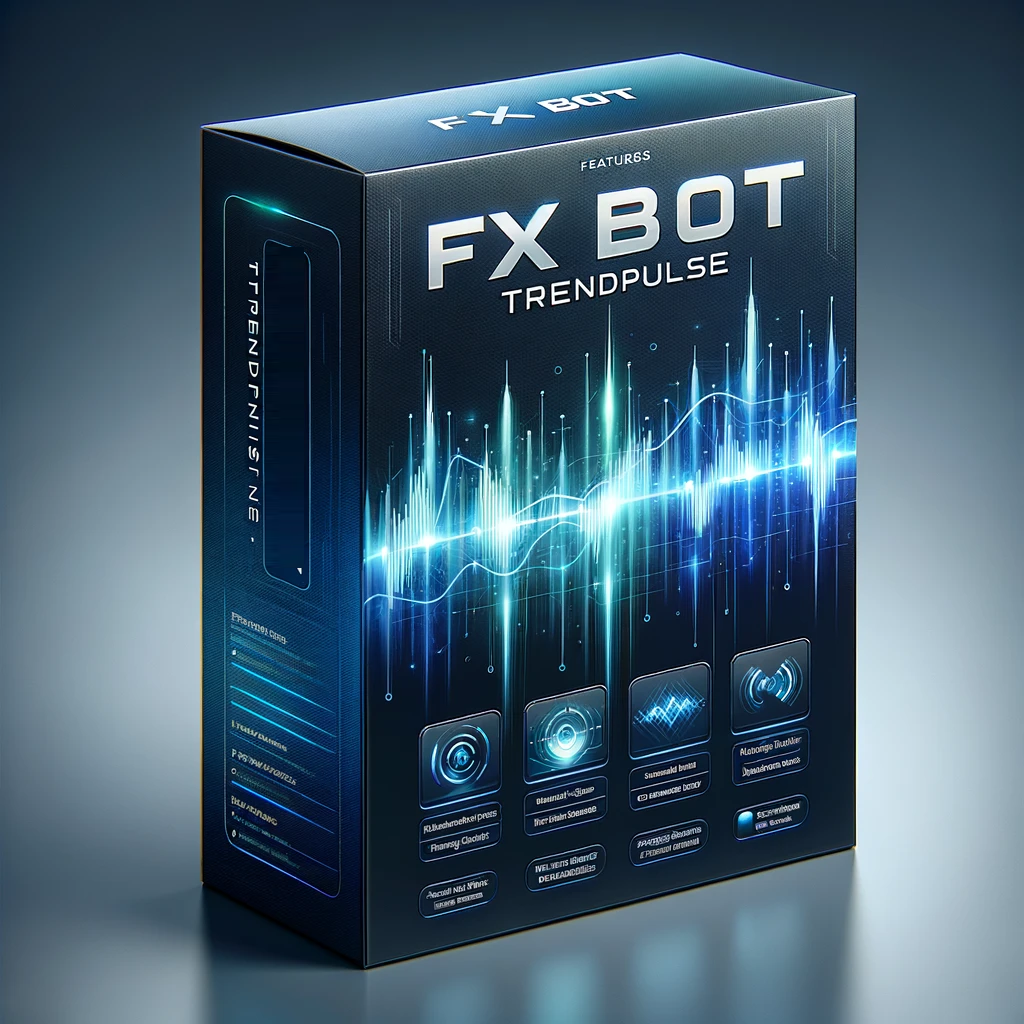
TrendPulse: Impulse-Based Automated Trading for Gold, Indices and FX
Counts price impulses inside a short window, skips the impulse itself, then enters a few seconds later in the direction of the burst with trailing management. Not toxic to brokers. One position per instrument. No martingale, no grid.
TrendPulse is an automated strategy that trades short bursts of directional price movement. Instead of reading indicators on closed bars, it counts individual price impulses inside a rolling time window. When enough impulses point the same way, and each one is large enough to be meaningful, the window is classified as a real market impulse and TrendPulse prepares an entry in that direction. It then waits, briefly and deliberately, before opening the position, applies stop loss, take profit and trailing, and manages a single position per instrument until it closes.
What TrendPulse does
- Detects impulses, not indicator crossings. Signal generation happens at price-movement resolution, inside the bar, so entries are early rather than confirmed-and-late.
- Requires agreement, not a single spike. A configurable number of same-direction impulses (typically 3 or 4) must clear a minimum size threshold inside the window.
- Deliberate delay before entry. The position is not opened at the tail of the burst, where the spread is widest and the fill is worst.
- Cannot be classified as toxic flow. TrendPulse does not open a position when the impulse occurs. It skips the impulse and enters several seconds later at the current market price, so no order is ever filled on a quote the broker has not finished updating.
- Two entry modes. Confirmation entry (wait for the move to extend) or pullback entry (wait for a retracement and enter at a better price in the same direction).
- Exit management built in. Stop loss, take profit and a configurable trailing stop that follows the move once it activates.
- Conservative by design. One position per instrument, position size never increased after a loss.
- Fully optimizable. Every threshold is a parameter, so the strategy can be tuned to your broker on real tick history.
How the signal is built
TrendPulse evaluates four conditions continuously as new prices arrive. A trade is only prepared when all four hold at the same time.
| # | Condition | What it does |
|---|---|---|
| 1 | Observation window | Impulses are counted inside a rolling window, for example the last 60 seconds. Older impulses drop out of the count. |
| 2 | Impulse count | The number of same-direction impulses in the window must reach the configured minimum, for example 3 or 4. |
| 3 | Impulse size | Each impulse must exceed a minimum size in points, so ordinary micro-jitter never counts toward the total. |
| 4 | Direction dominance | The window must be one-sided. A balanced window with impulses in both directions is treated as noise, not as a signal. |
# Signal condition, in plain terms
impulses_in_window(direction) >= min_impulse_count
AND  every counted impulse >= min_impulse_size
AND  direction is dominant in the window

# -> window classified as a market impulse
# -> wait entry_delay
# -> apply entry mode (confirmation or pullback)
# -> open one position, attach SL / TP / trailing
Why TrendPulse waits before entering
The moment immediately after a burst is the worst possible moment to be filled. The spread is at its widest, and the price you get is the one nobody else wanted. TrendPulse therefore steps back from the impulse cluster by a configurable interval before submitting the order.
The strategy is not toxic to the broker
TrendPulse does not open a position at the moment the impulse occurs. It skips the impulse and enters a few seconds later. That single design decision is what keeps the strategy outside the definition of toxic flow.
Brokers do not filter orders for being profitable. They filter orders that are executed during a price movement, on a quote the venue has not finished updating, because those fills come at the broker’s expense. That is what toxic flow means in practice. TrendPulse never places an order while the movement is happening. The impulse is observed, counted and deliberately passed over. By the time the order is sent, the burst is finished and the position is opened at the current market price, exactly like a manual trader who saw a move, waited, and then entered.
The result is order flow with no latency advantage in it and no stale-quote fills for an execution filter to key on. TrendPulse can be run on a normal retail account without the countermeasures that brokers apply to fast, execution-sensitive strategies. The background on those countermeasures is here: how brokers really price and fill your orders.
Two entry modes
After the delay, TrendPulse needs a rule for what counts as the market agreeing with the signal. Both available modes keep the original impulse direction. They differ in what they wait for.
Confirmation entryPrice must travel a further configured distance in the signal direction, for example 10 points, before the position opens. If the move stalls, no trade is taken. Use when: the instrument tends to keep running after a burst. |
Pullback entryPrice must retrace a configured distance against the signal, for example 10 points, and the position then opens in the original impulse direction at that better level. Use when: the instrument overshoots and snaps back before continuing. |
Exits and risk control
Because entries are timed to volatility, exits carry most of the work. TrendPulse attaches three layers to every position:
| Layer | Role |
|---|---|
| Stop loss | Hard risk boundary, sized against the volatility that generated the signal rather than an account-level default |
| Take profit | A ceiling for the trade, used to close out moves that reach the target cleanly |
| Trailing stop | Activates after a configured distance and follows the move at a configured gap. This is what turns the occasional strong continuation into the trade that pays for the false signals. |
Two hard rules sit above all parameters. TrendPulse holds a single position per instrument, so a cluster of impulses on the same move cannot turn into five correlated trades. And it never increases position size after a loss: there is no martingale, no grid, and no averaging into a losing entry.
Filters
Impulse detection is deliberately sensitive, so the filters carry the risk management. Available filters include a volatility filter based on average true range, which suppresses signals in conditions where normal movement already exceeds the impulse threshold, and a fast-feed filter that keeps the strategy out of the market during scheduled releases and quote anomalies, where a burst reflects a data print rather than directional intent.
Optimization on your broker
Every threshold in TrendPulse is exposed as a parameter, which means the strategy is built to be optimized rather than run on defaults. Testing this kind of logic needs real tick data: the events TrendPulse counts happen inside bars, so a bar-based test cannot see them at all.
The SharpTrader Backtester and Optimizer runs on real historical tick streams, applies historical spread per tick, and lets you set a realistic order execution time in milliseconds, so the results reflect the fills you would actually get. A staged approach keeps the parameter grid manageable:
| Pass | Optimize |
|---|---|
| 1 | Impulse parameters: window, minimum count, minimum size |
| 2 | Trailing parameters: activation distance and trail distance |
| 3 | Stop loss and take profit |
| 4 | Filters: volatility and price-movement filters |
Optimizing everything in one pass pushes the combination count into the hundreds of thousands and produces parameters fitted to a single fortnight. Four smaller passes finish faster and give you results you can interpret.
Instruments and requirements
| Item | Detail |
|---|---|
| Best suited to | Gold and equity indices first, then major currency pairs at lower signal frequency |
| Platform | Runs on the SharpTrader platform, which supplies the tick infrastructure and order routing |
| Hosting | A stable VPS is recommended for continuous operation |
| Positions | One per instrument, no size increase after a loss |
| Price | $895 USD. Optional coding module for SharpTrader, which unlocks custom filters and volatility features, $1,900 USD |
Who it is for
TrendPulse suits traders who want a directional automated strategy with transparent logic and full parameter access, and who are willing to spend an afternoon optimizing it on their own broker rather than expecting a preset to work everywhere. It is not a signal service and not a black box: every threshold that decides an entry is documented and adjustable. If you want the full theory behind the approach before buying, read our pillar guide on impulse trading strategies.
Frequently asked questions
What does TrendPulse actually trade?
It trades direction. When enough same-direction price impulses of sufficient size appear inside a short window, TrendPulse opens a single position in that direction and manages it with stop loss, take profit and a trailing stop.
How many impulses trigger a trade?
It is configurable. Three or four same-direction impulses inside a one-minute window is a common starting point, and both the count and the window length are parameters you can optimize per instrument and per broker.
Can a broker consider TrendPulse toxic?
No. TrendPulse does not open a position when the impulse occurs. It skips the impulse and enters several seconds later, so no order is ever filled on a quote the broker has not finished updating. Toxic flow is defined by execution taken during the price movement itself, and TrendPulse has no order in the market at that moment. Its fills are ordinary market fills at the current price.
Does TrendPulse use martingale or grid?
No. It holds one position per instrument and never increases position size after a loss. There is no averaging into a losing trade.
What is the difference between the two entry modes?
Confirmation entry waits for price to travel a further configured distance in the signal direction before opening, which filters out signals that do not extend. Pullback entry waits for a retracement against the signal and opens in the original direction at the better price, which improves the entry level at the cost of missing signals that never come back.
Can I backtest TrendPulse before trading it live?
Yes, and you should. The SharpTrader Backtester and Optimizer runs it on real tick history with historical spread and a configurable execution delay, which is the only way to test impulse logic meaningfully, since the events it counts happen inside bars.
Which instruments work best?
Gold and equity indices, because both move in concentrated bursts with real participation behind them. Major currency pairs work with lower signal frequency. Thin, slow instruments are poor candidates.
What do I need to run it?
The SharpTrader platform and a stable VPS for continuous operation. The optional coding module is only needed if you want custom filters and additional volatility features.
Subscribe to BJF trading research
New articles, research papers, and product releases, delivered when we publish them.
[activecampaign form=31]
Trade the burst, not the lag
Impulse detection, delayed entry, two entry modes and trailing management, with every threshold open for optimization on your own broker.